While funerary professionals and businesses offered an increasing range of services in the 20th century, this did not mean funerals changed across the entire region. By 1900, many rural funerals were still conducted by families, friends, and artisan undertakers. In many communities, there was limited financial and locational access to—or little need for—the growing number of “professional” funerary offerings.
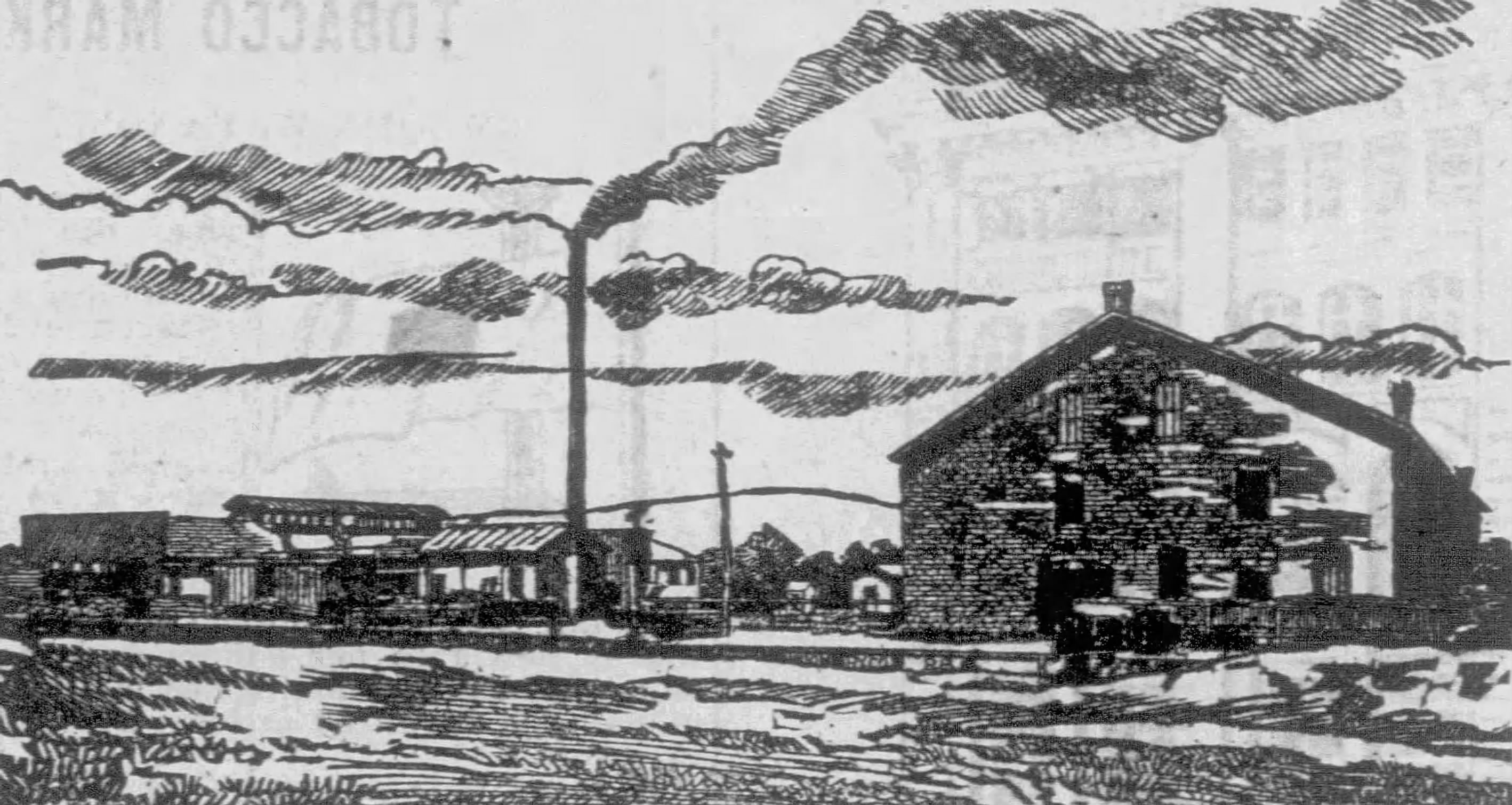
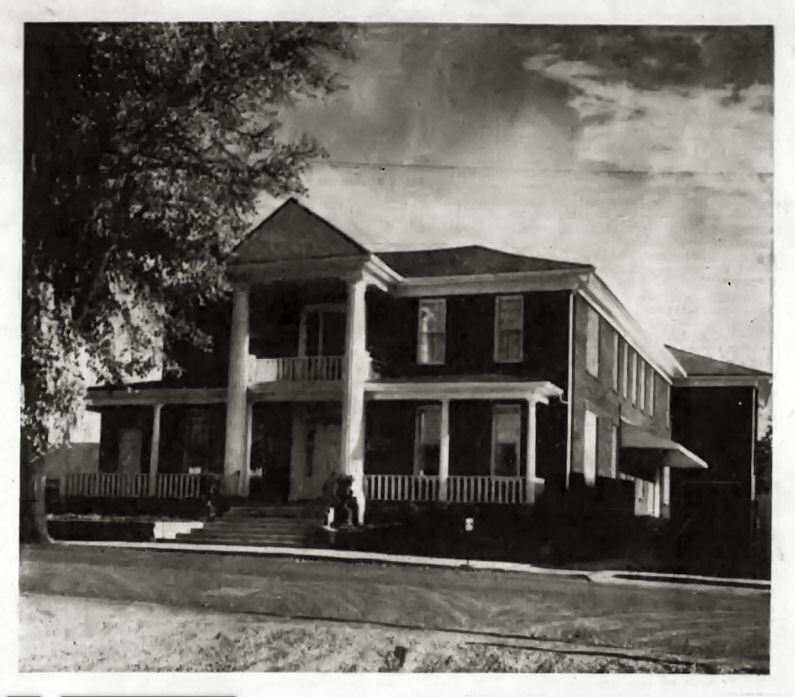
This, however, did not mean that communities completely lacked access to new services, nor that there was widespread resistance to changing practices. Rural funeral homes were present throughout East Tennessee in the early 20th century and were often located in county seats to serve surrounding areas. For example, Stetzer’s Funeral Home in Morristown, the seat of Hamblen County (shown at left), provided services to a region that was otherwise overwhelmingly rural.
Adoption
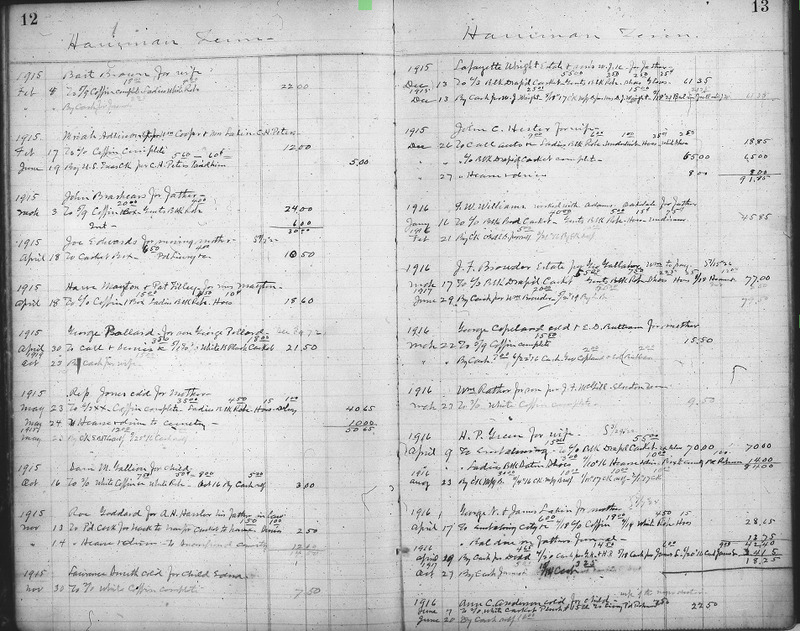
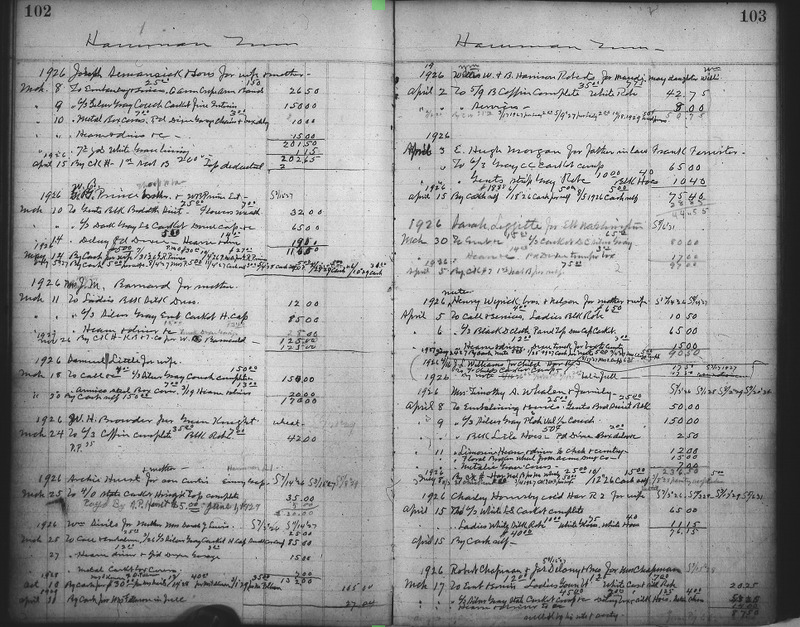
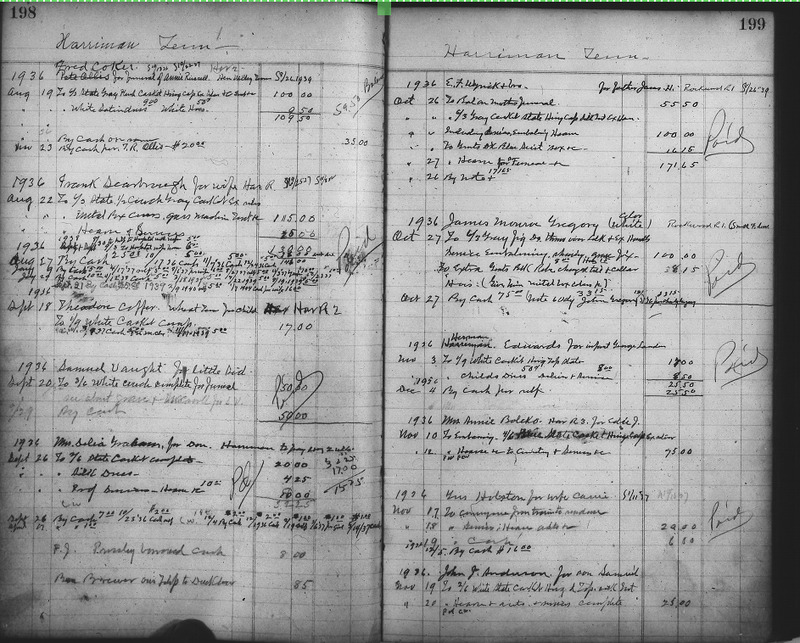
Business ledgers and records from these businesses, such as J. G. (James Gideon) D’Armond Funeral Home of Harriman, show that families in both urban and rural communities adopted new services piecemeal. Some families purchased complete commercial funerals—including embalming, burial cases, vaults, hearse service, and even clothing—while others chose only one or a few services and handled the rest themselves or through local artisans. These records reveal that adoption occurred gradually and unevenly, rather than broadly and immediately replacing past burial practices.
Above are snapshots of the D’Armond's business ledgers from 1916, 1926, and 1936. While there is an overall increase in the number of services purchased over time, the ledgers also show a wide range in practice, with many funerals still remaining relatively ‘simple’ and relying on fewer commercial services. For example, in 1939, funerals ranged from just $25 for a casket, burial, and nameplate, up to $171.65 for the casket, embalming, hearse, burial, and other services.
Access
Whether a family adopted new funeral practices—from embalming to motorized hearses—depended heavily on where people lived and whether they could afford the services. While many funeral homes mainly served cities, county-seat funeral homes like Kyker Funeral Home of Madisonville show that some rural communities also had access to commercial funerals.
Kyker Funeral Home of Madisonville was opened in 1922 by Joseph Samuel and Mary Jane Kyker, following the first funeral home they established in Sweetwater, Tennessee, in 1905. Both then and today, Monroe County was overwhelmingly rural with a substantial agricultural community. Kyker served families throughout the county far outside Madisonville, reaching other towns, foothill
communities, and more "remote" areas of the region.
The map below illustrates this. By mapping the burials conducted by Kyker Funeral Home of Madisonville from 1922 to 1929, we can see patterns of how far into rural communities funeral homes like Kyker could reach, as well as demographic information about the people who utilized these funeral home serices.
Map Tips
-
Use the timeline at the bottom of the map to watch burials populate the map over time.
-
Click on the points on the map to see background information about the people buried by Kyker Funeral Home at that cemetery, including their birthplace, occupation, and date of death, to see who utilized these early funeral home services.
-
For burial locations with more than one person, click ‘Browse Features’ under the point’s summary to see a full list of burials at that cemetery. Then click each name to view their details.
-
Kyker Funeral Home, especially in the late 1920s, served communities far beyond Monroe County, including North Carolina and Kentucky. Use the zoom feature to explore some of these distant funerals.
Findings
Looking at the records from 1922 to 1929 reveals key trends in who used Kyker Funeral Home of Madisonville’s services. Most burials were of locally born white farmers, typically interred in the Madisonville City Cemetery or rural church graveyards across Monroe County. While African American clients were less common, they still made up about 13% of the funeral home’s clientele, appearing nearly every year. Like white clients, most were farmers, though the records show a wide range of professions, including cooks, laborers, miners, housewives, a railroad employee, and a preacher. This shows that African Americans were active participants in funerary practices in Southern Appalachia, challenging the erasure of their experiences from the region’s history.
The map also shows how far Kyker Funeral Home’s services reached beyond Madisonville. While most burials were local, the funeral home served families across Monroe County, neighboring Tennessee counties like Blount, Loudon, and McMinn, and even into Cherokee County, North Carolina. It also reached historically “remote” communities within the county, including Ironsburg and Coker Creek, as well as Unaka, Kentucky—all wooded foothill and mountainous areas. Its service extended further north to Knox and Cocke counties and as far as Round Hill in Madison County, Kentucky, showing that funeral homes like Kyker’s provided care well beyond their immediate communities.