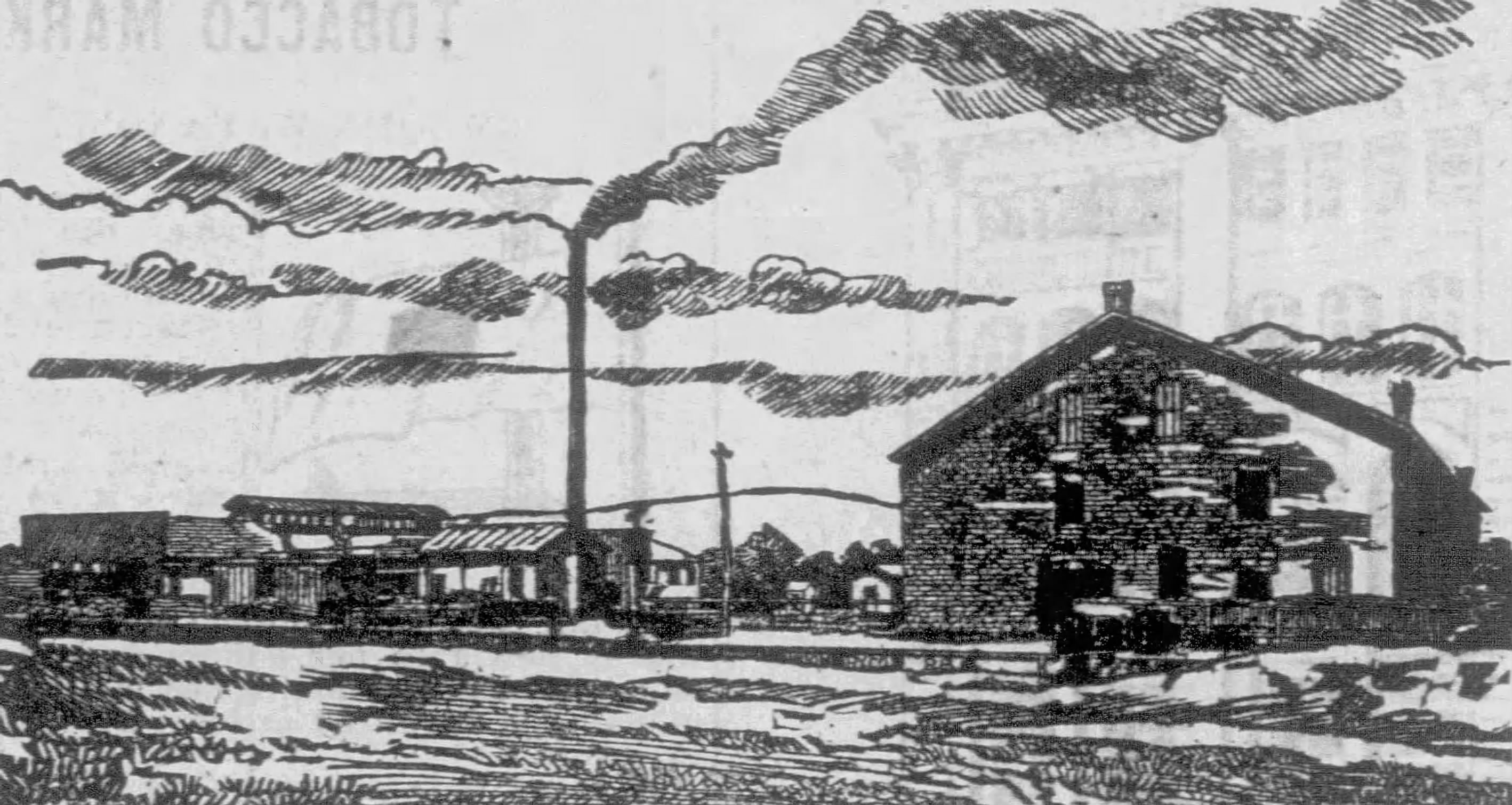
Sketch of the Chattanooga Coffin & Casket Company Factory from the Chattanooga Daily Times, December 8, 1892. Newspapers.com.
Artisan Undertakers: Without A Funeral Home, Who Made the Coffin?
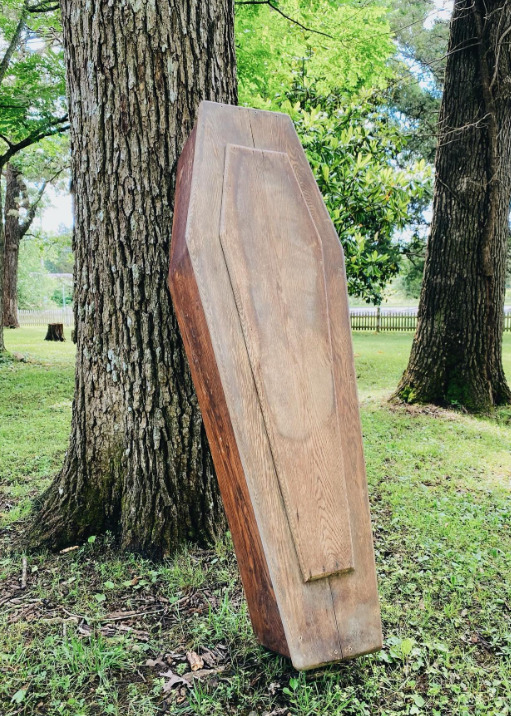
A simple wooden coffin crafted by Sam Wallace, farmer, store owner, and coffin maker, ca. 1920. Museum of Appalachia.
Across East Tennessee’s cities, county seats, and rural areas in the 19th and early 20th centuries, artisan undertakers played an important role in local funerals. These were professionals who usually held a main trade—such as carpentry, cabinet-making, or running a livery stable—who also assisted families with the burial process.
Commonly referred to as “coffin makers,” artisan undertakers could carry out many different responsibilities. Most built or sold coffins (and later, caskets), drawing on their main trade to support the work. Woodworkers, for example, often used spare, lower-quality lumber to craft specially-made coffins, while livery workers used their wagons or hearses to transport the dead and sold pre-made coffins.
Some also helped with the burial by assisting with grave digging or carving a simple grave marker with their trade tools. Because their skills and tools varied, the services they offered differed from one community to another.
For some people, undertaking was not a business. Instead, undertaking was a free service they provided to their communities. In his biography, Hancock County woodworker and cooper Alex Stewart (1891–1985) recalled his work within his rural community...
"I never charged a penny in my life for making a coffin, because I knowed that one day I was going to have to have one for myself."
- Alex Stewart, Alex Stewart, Portrait of a Pioneer, 1985.
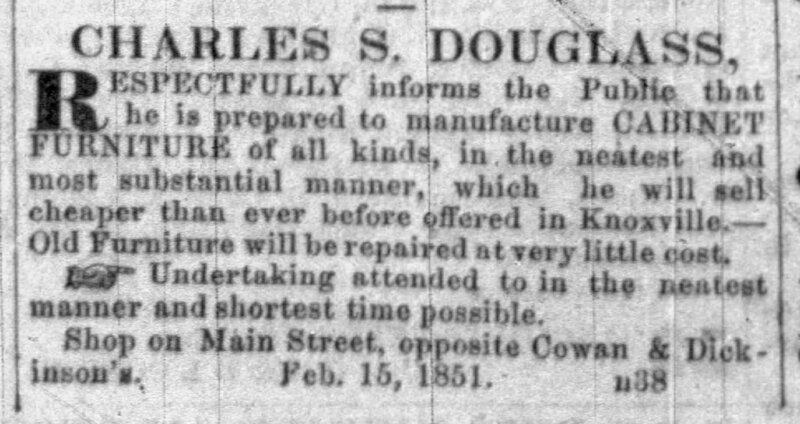
Advertisement for Charles S. Douglas's Furniture Business, with a Brief Mention of His Undertaking Services. Knoxville Weekly Whig, June 28, 1851. Newspapers.com.
Even as funerary technology and industry standards evolved in the later decades of the 19th century, artisan undertakers continued serving communities across East Tennessee well into the 20th century. Especially in rural communities, these undertakers often provided lower-cost and easier-to-access funeral services compared to some commercial providers. Some undertakers eventually grew their work into dedicated funeral businesses, becoming some of East Tennessee’s first professional funeral service providers, as explored in Growing Industry.